Whether we’re connecting with clients over coffee, running into neighbors, or fielding questions at a holiday gathering, the subject always turns to real estate. And for good reason!
The DC Metro market is in a fascinating state of transition, shifting from the extreme conditions of the past few years into a more balanced environment. Instead of the frenzy, we’re now seeing increases in housing inventory, stabilizing values in many sub-markets, and positive projections for improving buyer power as financing conditions ease. This unique mix of factors means buyers have more control, and sellers can make their next move with greater confidence.
People are eager for clarity about what these current trends really mean for buying, selling, or investing locally. Instead of letting you wade through confusing and conflicting headlines, we’ve narrowed down the conversations to the 3 most common real estate questions we are currently being asked on a daily basis.
1. “Will I even be able to find a home if I want to move?”
Yes, but what you’re looking for will determine the competition you face.
For years, the DC Metro area has struggled with historically low housing supply. The good news is that inventory has been on the rise in many parts of the metro area. In fact, total active listings have jumped significantly year-over-year which is a huge change from the bare shelves of 2021 and 2022.

This rising inventory means two key things for DC-area residents:
Buyers have more options, especially in the condo/townhouse market and in the outer suburbs, where supply levels have returned to, or surpassed, pre-pandemic norms.
Sellers have more places they can realistically move to next, which is slowly encouraging more homeowners who felt "locked in" by a low mortgage rate to list their homes.
This shift has resulted in a slightly longer ‘days on market’ across the region, giving buyers more time to compare options, conduct thorough inspections, and make a confident decision without wavering on major contingencies. While demand for detached homes in prime, close-in neighborhoods remains intense, the overall market is offering buyers more room to breathe.
2. “Will I ever be able to afford a house?”
Affordability is starting to improve. Finally.
It’s been a tough few years for buyers in the DC Metro region. However, the last few quarters have brought some much-needed good news by easing the two main financial pressures:
Mortgage rates have been slowly easing from their recent highs, with forecasts pointing toward further moderation.
Home price growth has been moderating across the region, and in some Maryland and D.C. zip codes, prices have leveled off or slightly declined year-over-year.
Nationally, the median monthly mortgage payment has been trending down since May 2025, reflecting this improving environment for buyers (as seen in the chart below):
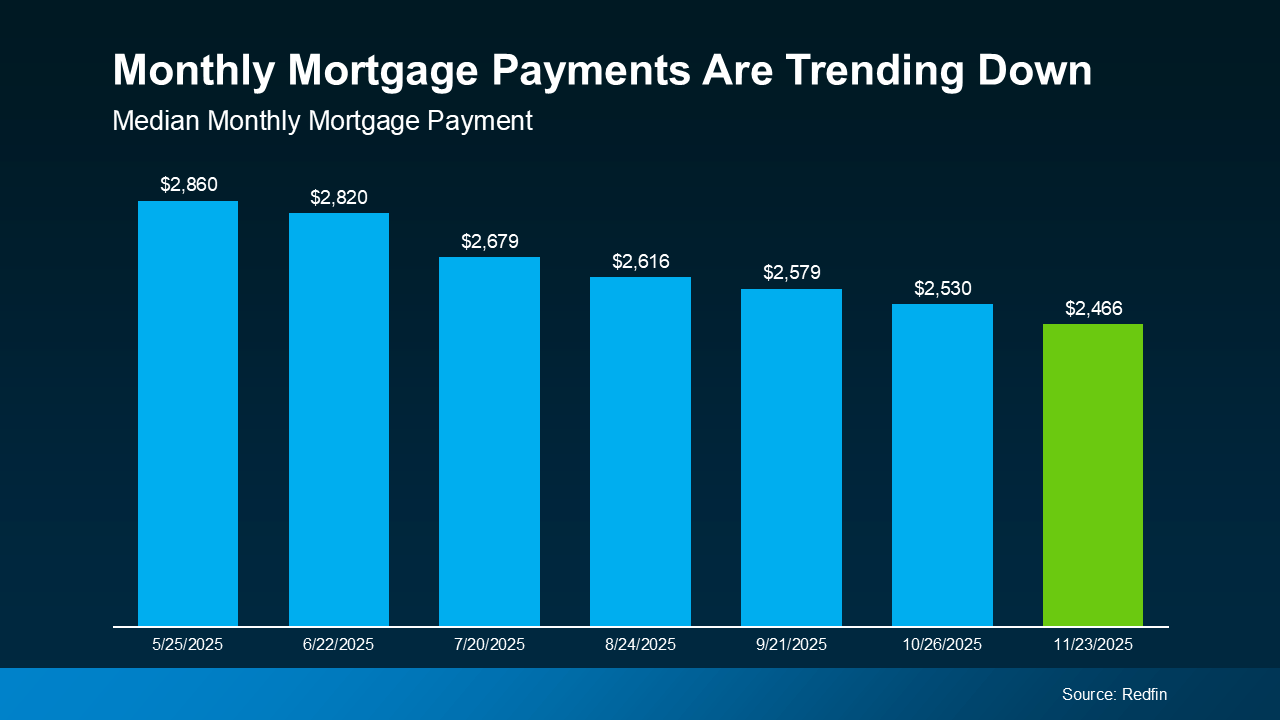
This combination adds up to a monthly mortgage payment that is more manageable than it was just a few months ago. Buying still isn't easy in a high-priced metro area, but the numbers are starting to shift. This means that for a lot of people, especially first-time buyers and those with solid incomes, purchasing a home in the DC area is becoming a more realistic goal again.
3. “Should I wait for prices to come down?”
The data doesn’t support waiting for a dramatic price drop in the DC Metro area.
Many people ask about the future of prices, but the DC Metro area is uniquely positioned for long-term stability. Our market rarely tracks national extremes because it's anchored by strong, resilient economic fundamentals. While inventory is showing healthy signs of growth, it remains balanced, which protects against a flood of listings that could depress values.
For context on our local market stability, the average sale price across all home types in the Washington D.C. Metro area has fluctuated between roughly $630,000 in November 2022 and nearly $788,000 as of October 2025 (as shown below), demonstrating a consistent pattern of value retention and seasonal variation, not a sharp decline.
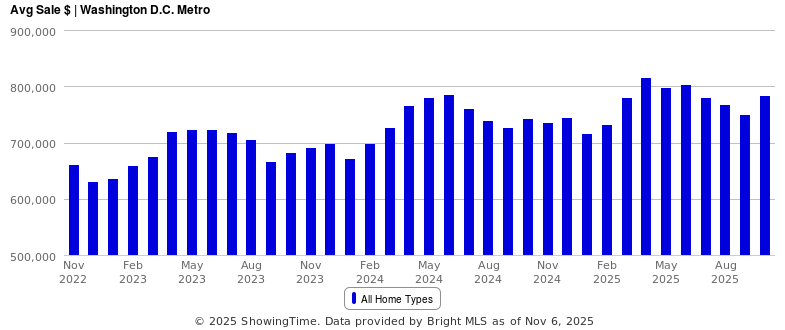
Significantly, homeowners throughout the region hold record levels of equity, putting them in an exceptionally strong financial position compared to past cycles. This high level of equity acts as a powerful buffer, securing the value of homes and pointing toward sustained stability in the DC Metro market.
That’s why waiting on the sidelines for a major price drop to get a "deal" isn't a very strategic plan in this region. History shows the same thing over and over: people who spend time in the market tend to build the most long-term wealth.
Bottom Line
The conversation around the DC Metro housing market can feel loud and confusing, especially when you are sorting through conflicting local headlines about inventory, affordability, and future prices.
To move from confusion to clarity, Connect with your Wardman Residential team member. We welcome a deeper conversation on these most common questions, or any other burning real estate questions you have. Whether you are thinking about buying or selling, we'll create a strategic plan that clarifies what's possible for you right now and gives you the confidence to make your move in this new market.